
Where Is Ballarini Cookware Made? Italian Heritage & Manufacturing Explained
When you’re investing in quality cookware, understanding where and how it’s made often matters as much as the design itself. Ballarini has been crafting cookware since 1889, rooted in the northern Italian town of Rivarolo Mantovano in the Lombardy region. Our manufacturing story blends traditional Italian metalworking with innovations like the Granitium non-stick coating, developed in-house to meet modern cooking demands.
Today’s Ballarini production spans facilities in Italy and partner sites across Europe, all held to the same rigorous standards that built our reputation over more than a century. Whether you’re considering a frying pan or a full set, knowing the origin and craft behind each piece helps you choose cookware that truly fits your kitchen.
Rivarolo Mantovano: The Birthplace of Ballarini
Ballarini’s story begins in 1889 in Rivarolo Mantovano, a small town in northern Italy’s Lombardy region known for its metalworking traditions. Paolo Ballarini founded the company here, initially producing copper and brass cookware using hand-forging techniques passed down through generations of local artisans. The town’s proximity to Milan and its network of skilled metalworkers made it an ideal base for a cookware manufacturer aiming to serve both Italian households and international markets.
Over the decades, the Rivarolo facility evolved from a small workshop into a modern production plant, but the commitment to Italian craftsmanship remained constant. Today, key product lines—including our signature aluminum cookware with proprietary coatings—are still manufactured in Italy, maintaining the quality standards that defined the brand from the beginning. The Italian heritage isn’t just about geography; it’s about a specific approach to materials, finishing, and durability that continues to shape every piece we make.
How Ballarini Cookware Is Manufactured Today
Modern Ballarini production relies on a combination of Italian facilities and carefully selected European partner sites, all operating under our technical specifications. The process starts with high-grade aluminum, chosen for its excellent heat conductivity and lightweight properties. Each pan is pressed or spun from aluminum blanks, then machined to exact thickness tolerances—typically ranging from 2.5mm to 5mm depending on the product line.
After forming, the cookware undergoes a multi-stage surface preparation: cleaning, priming, and then application of our non-stick coatings. Granitium, our proprietary coating system, is applied in controlled clean-room environments to ensure even coverage and long-term durability. The final steps include handle attachment—using rivets or welded joints depending on the series—and a quality inspection that checks for coating uniformity, handle stability, and flatness. Every piece is tested against our internal benchmarks before it’s packaged and shipped.
European Manufacturing Standards & Material Sourcing
All Ballarini cookware, regardless of which facility produces it, must meet European Union regulations on food-contact materials and PFOA-free coatings. We source aluminum from certified European suppliers, ensuring traceability and compliance with RoHS and REACH directives that restrict hazardous substances in consumer products. Handles are typically made from heat-resistant phenolic resin or stainless steel, both of which are tested for thermal performance and grip safety.
Our coating formulations are developed in-house and applied only in facilities that have passed our technical audits. This centralized control over materials and processes is what allows us to offer consistent performance across different product lines. When you’re deciding which Ballarini cookware suits your cooking style, you can trust that the manufacturing integrity is the same whether you’re buying an entry-level frying pan or a premium multi-layer set.
What Sets Italian-Made Ballarini Apart
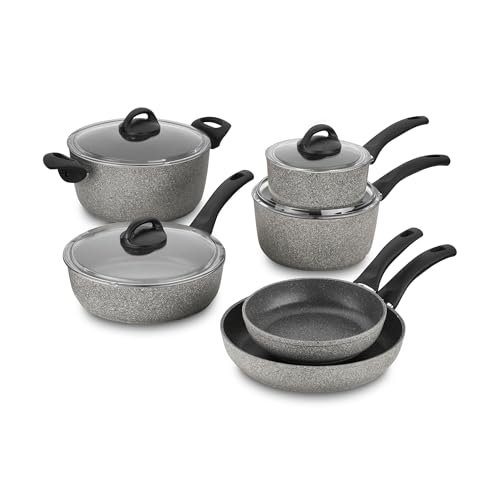
The Italian-made designation on certain Ballarini lines signals more than just origin—it reflects a production philosophy that prioritizes hand-finishing and tighter tolerances. Italian facilities typically handle our higher-end series, where details like polished exterior surfaces, reinforced rim edges, and precision-fitted lids are standard. These lines often feature thicker aluminum bases and multi-layer constructions that distribute heat more evenly, reducing hot spots during cooking.
Italian manufacturing also allows for closer collaboration between our design team and the production floor. When we introduce a new handle ergonomic or a revised coating formula, the Rivarolo plant can prototype and test iterations faster than offshore facilities. This agility has been crucial for innovations like our latest induction-compatible bases, which required reworking the aluminum-steel bonding process to maintain both magnetic properties and our signature lightweight feel. For cooks who value that extra attention to detail, the Italian-made lines represent the purest expression of what Ballarini has always stood for.
Understanding Ballarini’s Manufacturing Roots
Knowing where Ballarini cookware is made gives you insight into the craft and standards behind each piece. From the original Rivarolo Mantovano facility to modern European production sites, every step of the process reflects the brand’s Italian heritage and commitment to quality materials. Whether you’re drawn to Italian-made premium lines or exploring other collections, the same coating technology, material sourcing, and testing protocols apply across the board.
When you choose Ballarini, you’re choosing cookware shaped by more than a century of metalworking tradition and ongoing innovation. If you’re weighing different brands or trying to decide between Ballarini and other European manufacturers, understanding this manufacturing story helps you see what sets the brand apart. Our cookware is built to last, rooted in a place and a process that values both performance and heritage.
Notes
Ballarini cookware is manufactured in Italy and select European partner facilities. The brand’s original production site is in Rivarolo Mantovano, Lombardy, where it was founded in 1889. Today, key product lines—especially premium series—are still made in Italy, while other lines are produced at European facilities that meet Ballarini’s quality and safety standards. All manufacturing sites comply with EU regulations for food-contact materials and PFOA-free coatings.
Not every Ballarini piece is made in Italy, though the brand maintains Italian headquarters and produces many lines there. Some collections are manufactured at European partner sites under Ballarini’s technical oversight to ensure consistent quality. The specific origin varies by product line, but all facilities follow the same material standards and coating protocols developed in Italy.
Ballarini primarily uses high-grade aluminum for its cookware bodies, chosen for excellent heat conduction and lightweight handling. Handles are made from heat-resistant phenolic resin or stainless steel. The brand’s proprietary Granitium non-stick coating is applied in-house, and certain lines feature stainless steel or copper bases for induction compatibility. All materials are sourced from certified European suppliers to meet EU safety and environmental standards.
Ballarini maintains centralized control over coating formulations, material sourcing, and production specifications. Every manufacturing site—whether in Italy or elsewhere in Europe—must pass technical audits and adhere to the same testing protocols for coating uniformity, handle stability, and flatness. This standardized approach ensures that a Ballarini pan performs consistently regardless of where it was produced.
Ballarini owns and operates its primary facility in Rivarolo Mantovano, Italy, which handles design, prototyping, and production of premium lines. For other collections, the brand partners with European facilities that operate under Ballarini’s technical standards and quality control systems. This mixed model allows Ballarini to scale production while keeping critical processes—like coating development—in-house.
Ballarini was founded in 1889 by Paolo Ballarini in Rivarolo Mantovano, a town in northern Italy known for metalworking. The company originally produced hand-forged copper and brass cookware, serving both Italian and international markets. Over 130 years, Ballarini evolved from a small workshop into a modern manufacturer, but the Italian focus on craftsmanship, material quality, and finishing techniques has remained central to the brand’s identity.